The internet will give you seventeen calculators for this decision to buy or lease a car. Most of them will spit out a clear answer. And yet here you are.
That’s not a failure of your math skills. It’s a signal that the math is only telling part of the story.
If you’ve already done your homework — you know what a money factor is, you’ve run a total cost of ownership comparison, you’ve read the threads — this post isn’t going to repeat what you already know. Instead, it’s going to fill in what the spreadsheet can’t.
First: What the Numbers Are Actually Good For
Let’s be clear — the math matters. Running the numbers isn’t a waste of time. A solid total cost of ownership comparison will tell you whether a particular lease deal is genuinely competitive or just a low monthly payment with a lot of fees buried underneath it. Knowing the difference between a strong residual and a weak one changes whether leasing a specific vehicle makes any sense at all. Understanding how current interest rates affect the cost of financing a purchase is real, useful information.
The math is good at eliminating bad options. If a lease deal pencils out to more than buying over the same period and you plan to keep the car for seven years, that’s a meaningful signal. If financing rates are elevated and you’d be rolling in significant negative equity from a trade, the numbers will show you that too.
So don’t throw out the spreadsheet. Just understand what it can and can’t do.
What the Numbers Can’t Capture
This is where most people get stuck when they try to buy or lease a car — and where the real decision actually lives.
Mental overhead and lifestyle fit. Owning a car means carrying a certain kind of ongoing relationship with it. You’re thinking about when to service it, what it might be worth when you sell it, whether depreciation timing works in your favor, and eventually, how to offload it without getting crushed on price. Leasing shifts that burden — the residual value is someone else’s problem, the warranty typically covers the full term, and at the end you hand it back. For some people, that’s worth a lot. For others, the mileage tracking and condition anxiety that comes with a lease feels worse. Neither is irrational. It depends entirely on how your brain works.
Where your life is headed. A two-year-old lease assumption about your mileage, your living situation, or your family size can become a very expensive miscalculation. If you’re in a period of transition — new job, possible relocation, growing family, changing commute — the flexibility of returning a vehicle at lease end has real value that doesn’t show up in a payment comparison. On the other hand, if your life is stable and you run high miles, being locked into mileage limits is a cost that the calculator often underweights.
Your relationship to ownership. This sounds soft, but it’s real. Some people genuinely want to own their car outright, feel something when they make that last payment, and value the freedom to modify, sell, or drive it into the ground on their own terms. Others don’t care at all — they want access to a reliable, safe vehicle and minimal friction. Both are completely valid orientations, and the right answer is different for each of them.
Risk tolerance. Buying long-term is generally a bet that the car holds together reasonably well, that you don’t need to exit the loan unexpectedly, and that your financial situation stays stable enough to handle repair costs once the warranty expires. Leasing hedges some of that risk — you’re rarely out of warranty, and you’re not exposed to catastrophic depreciation events. But leasing has its own risks: gap coverage gaps, early termination penalties, and the reality that you’re always in a payment with no equity building. Which risks feel more manageable to you is a question only you can answer.
The Market Context That Changes the Math Anyway
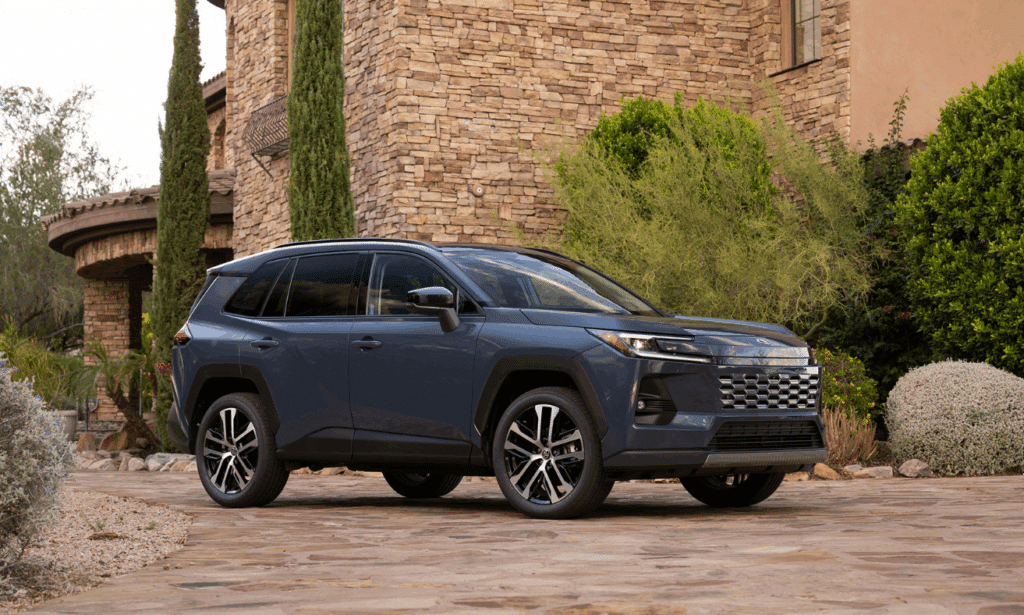
[Featured: 2026 Toyota RAV4 Limited StormCloud]
Even a perfect spreadsheet goes stale.
Interest rates have a significant effect on the cost of financing a purchase, and they’ve moved meaningfully in recent years. The rate you model in your comparison today might look different from what you’d actually qualify for — and a one or two point difference in APR over a five-year loan is not a small number.
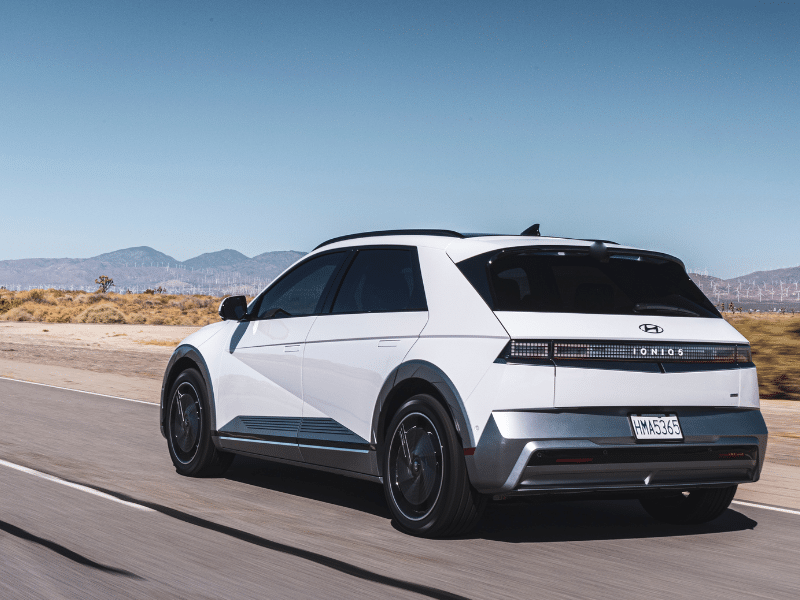
On the lease side, residual values are set by manufacturers, not the market. They use residuals strategically. A high residual makes leasing cheaper for you in the short term. A low one makes it expensive regardless of what the sticker says. Which brands tend to offer the most competitive lease programs varies more than most people expect, and it shifts month to month. Residuals on EVs in particular have shifted substantially as the used market has repriced electric vehicles, and that’s changed the lease-versus-buy math on specific models in ways that weren’t predictable a year or two ago.
For EV shoppers in particular, the incentive landscape is worth scrutinizing carefully. Federal tax credits for both EV purchases and leases expired in late 2025, but state, utility, and local EV incentives still exist in many markets and can be meaningful — the availability varies significantly depending on where you live. Getting this wrong, or not knowing what you’re eligible for, can mean leaving real money on the table.
The numbers on paper are only as good as the market assumptions behind them, and those assumptions are moving targets.
A Framework for Deciding to Buy or Lease a Car That Actually Holds Up
Rather than a formula, here’s a way of thinking about it.
Let the math do what it’s good at: eliminate the clearly bad options. If the numbers strongly favor one path for your situation, take that signal seriously. But don’t expect the calculator to make the final call.
Once you’ve narrowed the field, make the last decision based on what your life actually looks like and where it’s going. How much flexibility do you need? How much cognitive load do you want to carry? What are you optimizing for — cash flow today, net worth over time, or just not thinking about this again for a few years?
The math narrows the field. Everything else makes the choice.
When It Helps to Talk to Someone
Most people who make confident, well-reasoned decisions on this have done two things: they’ve gotten the numbers close enough to eliminate bad options, and they’ve thought through the context with someone who’s seen a lot of these decisions.
Not because the decision is impossibly complex — it isn’t. But because it’s surprisingly easy to weigh one factor too heavily when you’re inside your own head. Someone who works through this every day, with a lot of different people in a lot of different circumstances, tends to ask the questions you didn’t think to ask yourself.
That’s not a pitch. It’s just how good decisions usually get made.
At Cartelligent, our advisors help people think through exactly this — the numbers and the context — before you ever set foot in a dealership. If you want to talk it through, we’re here. Tap the Get Started button in the upper right corner if you’re ready to talk now.