
After helping thousands of clients navigate vehicle decisions over the years, we’ve heard just about every misconception imaginable about leasing a car. Some of these myths stop people from making smart financial decisions. Others lead to unpleasant surprises when it’s too late to course-correct. As your trusted advisors at Cartelligent, we’re sharing the truth behind the most persistent leasing myths we encounter—straight from our experience working with real clients, real situations, and real lease agreements.
Whether you’re considering leasing a car for the first time or you’ve leased before and want to better understand your options, this guide cuts through the confusion with facts you can actually use.
Myth #1: Leasing a Car is Like Renting—You Can Lease for Less than 12 Months
The Reality: This is one of the most expensive misconceptions we see. Leasing a car creates a legally binding contract, typically for 24 to 36 months. You can’t simply return the vehicle when your circumstances change without facing substantial penalties.
According to U.S. Bank, early termination penalties can total up to several thousand dollars, with the actual charge depending on when the lease ends. Chase Auto Finance confirms these charges may be substantial and can cost more than keeping the car through the full lease term. We’ve counseled clients facing exactly these situations—early termination fees that exceeded the cost of simply finishing the lease term. When we help clients evaluate whether leasing a car makes sense for their situation, we always discuss their commitment timeline first.
Myth #2: You’re Just Throwing Money Away
The Reality: This myth assumes ownership is always superior, but it completely ignores how depreciation works. Whether you finance a vehicle and trade it in after three years, or lease for three years, you’re paying for essentially the same thing: the vehicle’s depreciation during that period.
The difference? When leasing a car, you’re only financing the portion of value you actually use. We’ve worked with clients who specifically choose to lease because it’s more financially efficient for short-term vehicle use. They’re not “throwing money away”—they’re making a calculated decision that preserves capital and provides predictable costs. The “throwing money away” argument only holds if you plan to keep a vehicle for 10+ years after paying it off. For everyone else, the math tells a different story.
Myth #3: Leasing Enables Worse Credit Than Buying
The Reality: Actually, it’s the opposite. In our experience working with lease applications, leasing a car typically requires better credit than traditional auto loans. According to Experian’s State of the Automotive Finance Market report, the average credit score for new car leases in Q3 2025 was 753, compared to 684 for used car loans—a 62-point difference.
Why? Leasing companies face more risk because they’re banking on accurate residual value predictions. They prefer prime and super-prime borrowers, typically those with credit scores of 670 or higher. If your credit isn’t quite there yet, we can discuss co-signer options or financing alternatives that might work better for your situation right now.
Myth #4: Every Tiny Scratch and Dent Will Cost You
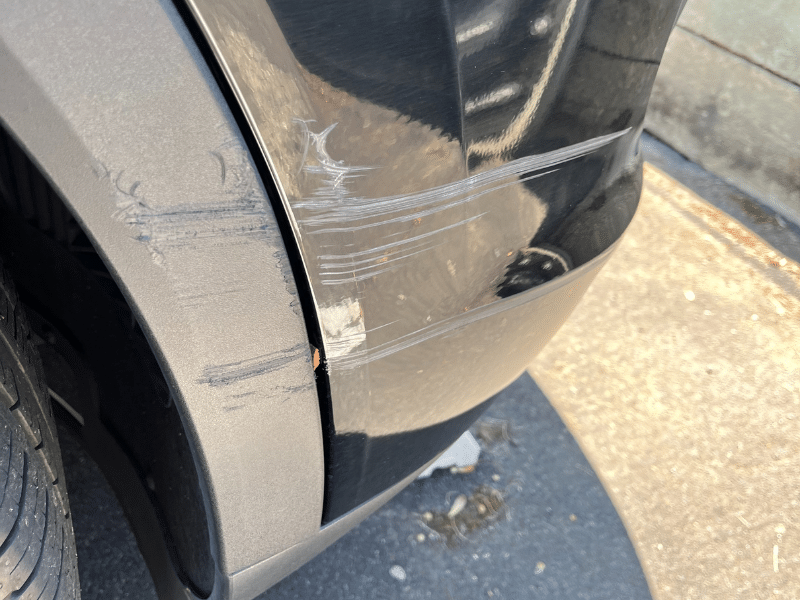
The Reality: This fear keeps people up at night unnecessarily. Leasing companies expect normal wear and tear and publish specific guidelines—often in detailed Fair Wear and Tear booklets that define exactly what’s acceptable.
According to industry-standard guidelines published by major manufacturers, minor door dings, scratches under 25mm in length, and small dents up to 10mm with unbroken paint are typically acceptable. The Federal Reserve notes that leasing companies set wear-and-tear standards in specific terms, and any standards must be reasonable. Over the years, we’ve reviewed countless lease-end inspection reports with clients. The charges appear when damage crosses into excessive territory: deep scratches exposing bare metal, large dents, cracked windshields, badly curbed wheels, torn upholstery, or significant stains. When leasing a car through Cartelligent, we walk you through the wear-and-tear guidelines upfront so you know exactly what to watch for. Another safeguard is to add lease protection to cover damage. Every manufacturer is different so lean on your advisor for details.
Myth #5: Lease Terms Aren’t Negotiable
The Reality: This might be the most damaging myth we encounter because it costs people real money. The capitalized cost (the vehicle’s price) can be negotiated.
Many people focus exclusively on the monthly payment without realizing they should negotiate the purchase price first—exactly as if they were buying. We’ve saved clients thousands by negotiating the cap cost before discussing lease structure. When you work with Cartelligent for leasing a car, our advisors handle these negotiations as part of our service. We know which numbers matter most and where manufacturers are willing to move so we know all of the real levers that can be pulled to get you an ideal price and terms.
Myth #6: Leasing Always Costs More Than Financing
The Reality: This myth conflates short-term and long-term costs. Over a 2-4 year period, leasing a car typically costs roughly half what financing would cost for the same timeframe. However, perpetually leasing new vehicles every few years does cost more than buying one car and driving it for a decade after the loan is paid off.
The question isn’t which is categorically “cheaper”—it’s which aligns with how you actually use vehicles. We’ve worked with clients who keep vehicles 12+ years and financing made perfect sense. We’ve also advised clients who upgrade every three years, and for them, leasing is demonstrably more cost-effective than the constant cycle of financing, depreciation, and trade-ins. The “best” choice depends on your driving patterns, preferences, and how you value having the latest technology and safety features.
Myth #7: All Dealers Offer the Same Lease Deals
The Reality: This couldn’t be further from the truth. Lease terms vary dramatically between manufacturers, individual dealerships, and even month-to-month based on incentive programs and regional market conditions.
Different brands subsidize their residual values to different degrees. Some manufacturers heavily incentivize leasing to move inventory; others barely support it. Regional demand affects local dealer pricing. Shopping around isn’t optional—it’s essential. This is precisely where Cartelligent adds value as an auto broker when you’re leasing a car. We monitor these variations across manufacturers and can identify which brands are offering aggressive lease programs right now, potentially saving you hundreds per month compared to walking into a single dealership. And, we have a wide dealer partner network that unlocks access to so much more inventory–and deals. For now, you can read up on the best lease deals terms of which brands offer competitive lease programs.
Myth #8: High-Mileage Drivers Can’t Lease

The Reality: While standard leases default to 10,000-12,000 miles annually according to the Federal Reserve, mileage limits are completely negotiable. We routinely structure leases with 15,000, 18,000, or even 20,000+ annual miles.
Yes, your monthly payment increases with higher mileage allowances, but it’s almost always cheaper to purchase those extra miles upfront than to pay excess mileage fees later. Industry data shows these fees typically range from $0.10 to $0.30 per mile over the limit, with most leases landing between $0.15 and $0.25 per mile. Going over by just 5,000 miles could mean owing $750 to $1,250 in fees. When evaluating whether leasing a car makes sense for your commute or lifestyle, we calculate your realistic annual mileage and build the appropriate allowance into the lease structure from day one.
Myth #9: Leasing Has Special Tax Benefits for Everyone
The Reality: This is partially true but widely misunderstood. For personal use, there’s no federal tax deduction for leasing a car. However, lessees in most states only pay sales tax on the monthly payments rather than the full vehicle price, which represents real savings—sometimes thousands of dollars.
For business use, lease payments can be tax-deductible, but so can loan payments on purchased vehicles—the deduction isn’t unique to leasing. The actual tax implications depend on your specific business structure, use percentage, and whether you’re operating as an LLC, S-corp, or sole proprietor. We’ve seen clients make leasing decisions based on incorrect tax assumptions, which is why we always recommend consulting with your CPA before leasing a car for tax benefits. The tax situation is nuanced and very individual.
Myth #10: At Lease-End, You Walk Away With Nothing
The Reality: This myth ignores your end-of-lease options. You don’t just walk away—you choose from multiple paths: return the vehicle, purchase it for the predetermined residual value, or extend the lease.
Interestingly, during recent market conditions with vehicle shortages, we’ve seen many clients discover they have equity in their leased vehicles. When the market value exceeds the residual value, you can purchase the vehicle and immediately sell or trade it for profit. We’ve helped clients realize thousands in unexpected equity this way. Even when you return the vehicle, you’ve had predictable costs, driven a reliable car under warranty, and avoided the uncertainty of long-term ownership and depreciation. That’s not “nothing”—it’s a deliberate financial strategy. Here’s more on how a lease buyout works, and what options you have.
The Bottom Line: Expertise Matters When Leasing a Car
These myths persist because leasing is genuinely more complex than traditional vehicle financing. The terms, calculations, and options can be overwhelming—especially when you’re facing a high-pressure sales environment at a dealership.
That’s exactly why Cartelligent exists. Our trusted advisors have helped clients get into over 50,000 cars and have seen every variation, every negotiation tactic, and every potential pitfall. We know which manufacturers are subsidizing leases aggressively this month. We know when lease-end equity situations make buying out your current lease smarter than starting fresh. We know how to structure mileage allowances that actually match your life.
When you’re considering leasing a car, you shouldn’t have to wonder if you’re getting accurate information or if there’s a hidden catch you haven’t discovered yet. You deserve transparent, expert guidance based on years of real-world experience—not myths, not sales pressure, just the truth about what will actually work for your situation.
That’s what our team delivers, every single time. Whether you want to buy or lease a car–have the insiders help you this time around.
Sources
- Experian. “State of the Automotive Finance Market: Q3 2025.” December 2025.
https://www.experian.com/automotive/auto-credit-webinar-form
- U.S. Bank. “Returning a Leased Vehicle Early.” April 2025.
https://www.usbank.com/vehicle-loans/auto-loans/auto-leasing/returning-a-leased-vehicle-early.html
- Federal Reserve. “Vehicle Leasing: More Information about Excessive Wear-and-Tear Charges.”
https://www.federalreserve.gov/pubs/leasing/resource/consider/endopen_info10.htm
- Federal Reserve. “Keys to Vehicle Leasing: A Consumer Guide.”
https://www.federalreserveconsumerhelp.gov/-/media/files/learnmore/keysbrochure-final.pdf
- U.S. Bank. “Buying versus Leasing Your Next Vehicle.” July 2025.
https://www.usbank.com/financialiq/manage-your-household/buy-a-car/car-shopping-buying-versus-leasing.html